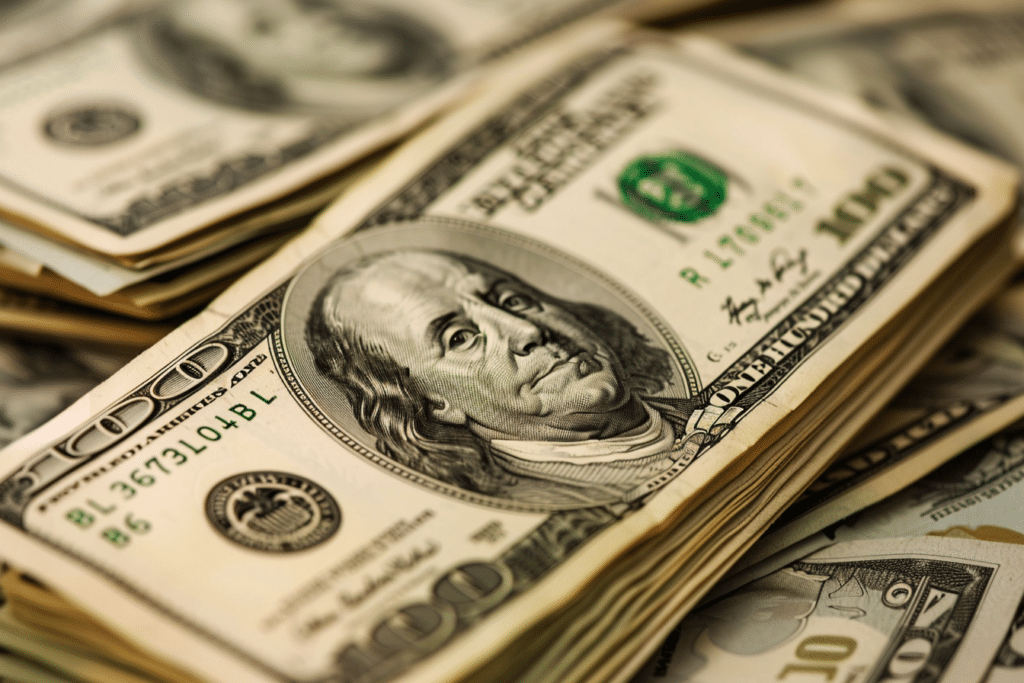
The U.S. dollar has had its worst start to a year since 1973, falling by more than 10 percent against a basket of major currencies in the first half of 2025. That performance has rekindled debate about how safe the greenback really is and the implications for global markets.
Several factors contributed to the slide. First, policy unpredictability in Washington — particularly a renewal of trade tariffs and mounting fiscal burdens — has shaken investor confidence. Second, concerns about the independence of the central bank surfaced amid sweeping commentary on interest-rate direction and economic strategy. Third, the weakening dollar itself prompted investors and central banks to reduce staggered exposure and hedge more actively.
Despite the slide, the dollar’s role as the main global reserve currency is still intact thanks to the depth and liquidity of U.S. financial markets and the predominance of dollar-denominated assets including Treasury securities. In many emerging-market economies and global institutions it remains the primary currency for trade invoicing, reserves and financial settlement.
That said, the decline highlights vulnerabilities. A weaker dollar can squeeze U.S. corporate earnings derived abroad, raise import-driven inflation and increase foreign investor concerns about value-preservation. Additionally, emerging alternatives — notably the euro, yen and yuan — are gaining incremental traction, though none yet threaten the greenback’s primacy.
For global investors the takeaway is nuanced. The dollar may no longer offer the unassailable safe-haven appeal of past decades, so diversification makes more sense than ever. At the same time, the dollar’s entrenched infrastructure means any major shift will be slow. The risk is less about immediate collapse and more about gradual repositioning.
Ultimately this episode is a reminder: global currency architecture remains anchored in the U.S. dollar, but forces of change are quietly building. Monitoring policy, structural fiscal dynamics and international capital flows will be key to judging how the greenback adapts.